Fly-in UWILD/IWS – Worldwide ROV Inspection Team
Norwegian DNV-approved UWILD/IWS support at your vessel
ROV & Dykker Service AS provides mobile UWILD/IWS and underwater ROV inspection support for vessels in Norway and internationally.
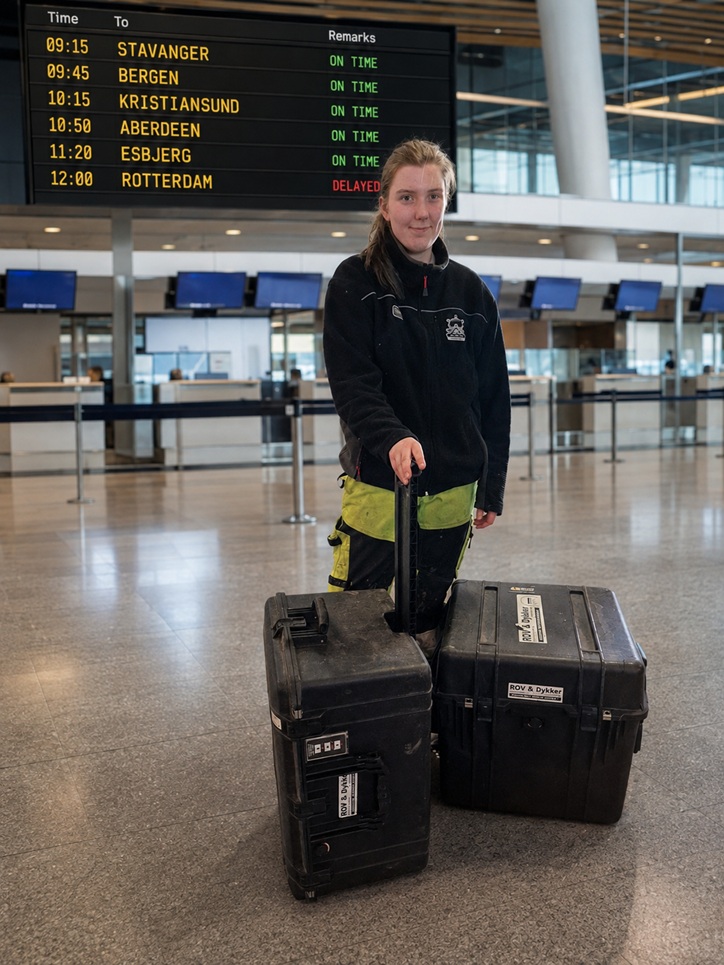
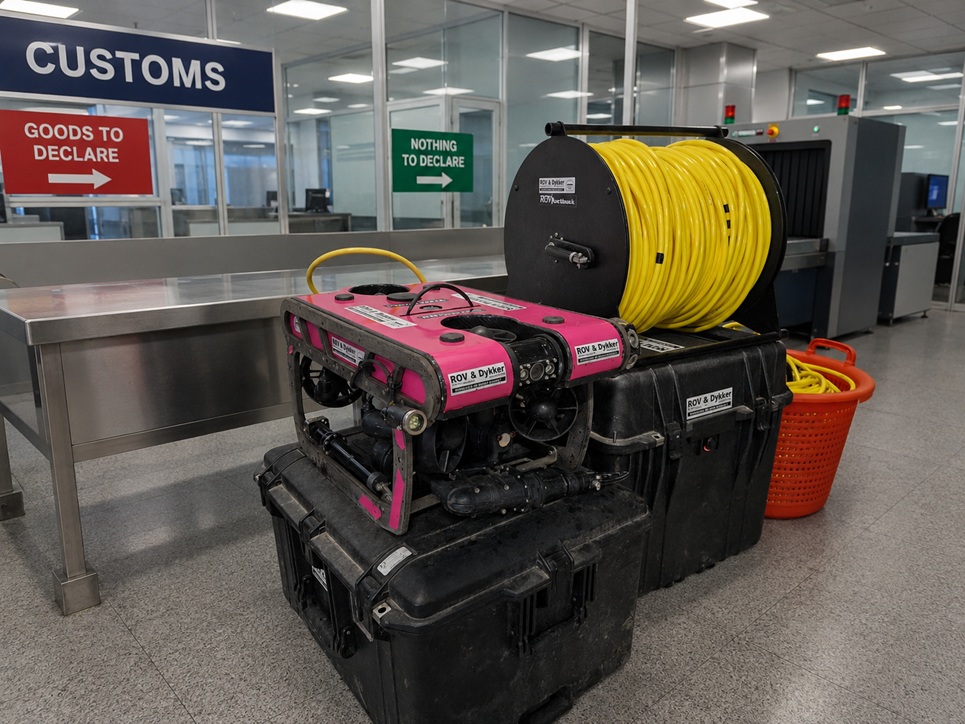
Our compact Deep Trekker PIVOT system can travel as checked airline baggage, allowing a two-person inspection team to mobilise directly to the vessel without transporting a large ROV spread as cargo.
The system can be launched and recovered manually by the team. No crane or dedicated lifting equipment is required.
Contact us with the vessel location, available port window and required inspection scope, and we will assess the practical requirements for mobilisation
Need an inspection in Norway? Read more about our DNV-approved UWILD/IWS inspection services in Norway..
DNV-approved UWILD/IWS
ROV & Dykker Service AS is a Norwegian DNV-approved service supplier for underwater inspection in lieu of dry-docking using ROV and commercial divers.
The inspection scope is agreed with the vessel representative and classification society before mobilisation. Depending on class requirements and underwater conditions, the operation may include visual inspection, cleaning of inspection points and documentation of relevant underwater components.
A class surveyor may attend the inspection physically or follow the operation remotely through live video and two-way communication.
RDS Operativ – built by us for work in the field
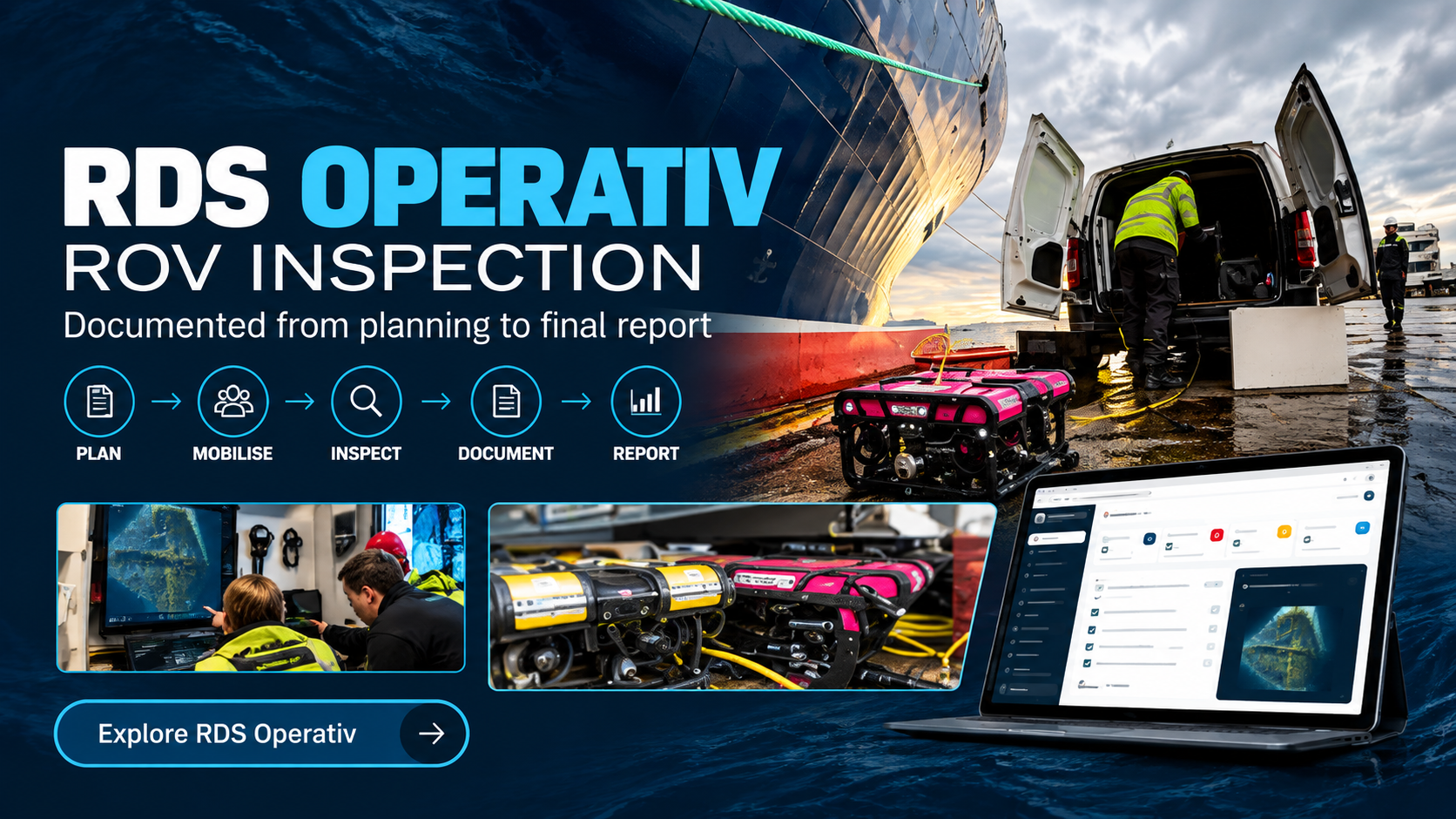
RDS Operativ is our 100% in-house developed app for diving and ROV operations. It brings planning, safety reviews, inspection records, images, observations, deviations and reporting into one workflow. Our crew records the work on a phone or tablet as it happens, giving them a clear overview in the field and making it easier for the client to see what was inspected and found.
From inspection to final report
During a UWILD/IWS inspection, we use RDS Operativ to keep inspection points, images, video and observations together under the same assignment. This helps us trace findings to the relevant part of the vessel and gives the vessel’s technical team a clearer basis for follow-up.
Typical inspection areas
A Fly-in UWILD/IWS operation may include inspection of:
- Hull plating and visible coating condition
- Propellers and propeller blades
- Rudders and steering components
- Thrusters and thruster tunnels
- Sea chests, gratings and accessible sea inlets
- Sacrificial anodes and visible cathodic-protection components
- Overboard discharges and underwater openings
- Welds, markings and other agreed inspection points
- Visible damage following contact, grounding or suspected impact
The final inspection scope must follow the requirements agreed between the vessel, class surveyor and inspection supplier.
Compact equipment for air travel
The Fly-in system is based on a Deep Trekker PIVOT ROV with control equipment and tether management.
The equipment is prepared for transport as checked airline baggage rather than conventional air cargo. The exact baggage arrangement depends on airline limits, destination, customs requirements and the equipment configuration required for the assignment.
The ROV can be launched and recovered manually by the two-person team from a suitable deck position, quay or access point agreed with the vessel.
Power and onboard requirements
Access to 230 V power onboard is preferred for continuous operation. Battery operation may be possible for limited work, but it is not our preferred solution for a full UWILD/IWS inspection.
Before mobilisation, we need to confirm:
- Suitable 230 V power supply
- Safe working position with access to the water
- Suitable launch and recovery point
- Vessel draft and underwater arrangement
- Port restrictions and permission for underwater operations
- Expected current, visibility and water depth
- Vessel movements, nearby traffic and propeller restrictions
- Internet connection when remote surveyor attendance is required
A short technical review before travel reduces delays when the team arrives at the vessel.
Live video and remote surveyor attendance
The ROV video can be shared live with the vessel representative, technical management and class surveyor.
The system supports two-way communication, allowing the surveyor to request alternative camera angles, closer views or repeated inspection of individual components while the ROV remains in the water.
The operation can be recorded, and relevant observations can be delivered as video files, still images and an inspection report.
Remote attendance must be agreed with the relevant classification society before the inspection.
Two-person mobile inspection team
A typical Fly-in deployment is carried out by a two-person ROV team.
The compact setup is intended for visual ROV inspection and documentation. If cleaning, physical measurements, repair work or commercial diving is required, the scope and additional personnel or equipment must be assessed separately.
The team can coordinate with the vessel crew, superintendent, local agent, shipyard and class surveyor before and during the inspection.
Mobilisation and customs planning
International mobilisation requires early clarification of flights, baggage limits, temporary import procedures, customs documentation and local permission to conduct underwater operations.
Where applicable, the equipment may require temporary-export documentation or ATA Carnet handling. Requirements vary between destinations and must be confirmed before travel.
ROV & Dykker Service AS reviews the practical transport and mobilisation requirements for each enquiry before confirming the assignment.
Information required for a quotation
Please provide:
- Vessel name and IMO number
- Vessel location and port
- Expected arrival and departure dates
- Classification society
- Required UWILD/IWS scope
- General arrangement or relevant underwater drawings
- Vessel draft and available launch position
- Information about 230 V power and internet access
- Local agent or port contact
- Known damage, fouling or operational limitations
Photographs of the proposed working and launch area are useful when planning the mobilisation.
About ROV & Dykker Service AS
ROV & Dykker Service AS is based in Lyngdal, Norway. The company was established in 2002 and provides ROV inspection, commercial diving, UWILD/IWS and documented underwater services for vessels, industry, ports, infrastructure and power-generation facilities.
We operate our own ROV systems, commercial-diving equipment and workboats. Our combination of practical diving experience, mobile ROV technology and live inspection documentation allows us to select an efficient method for each assignment.
Request a Fly-in UWILD/IWS assessment
Contact us with the vessel location, available time window and required inspection scope. We will assess mobilisation, equipment, power requirements, class coordination and documentation before providing a proposal.
Svarskjema

